
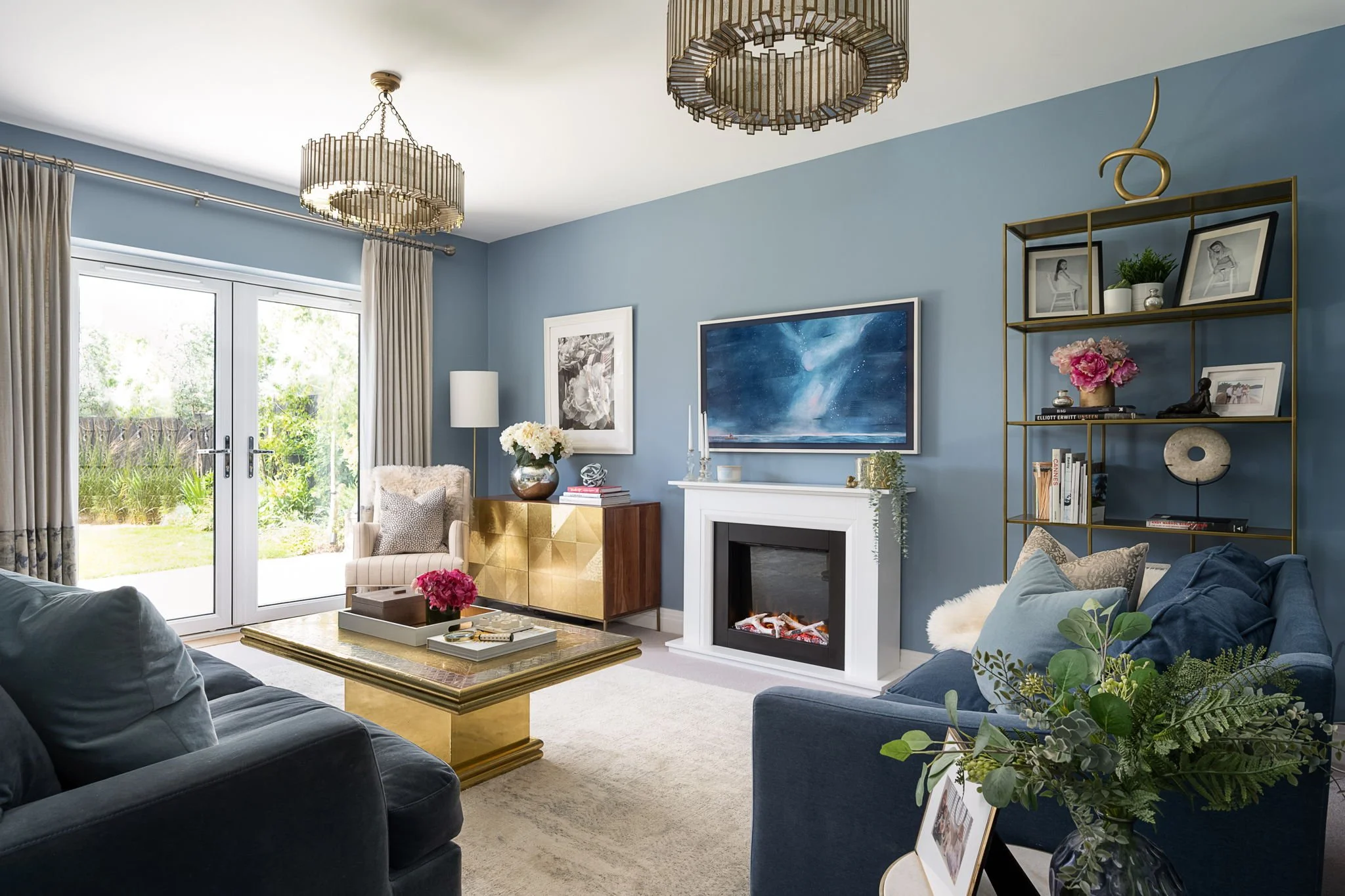
Have you ever looked around your living room and thought, something just isn't quite right, but I can't put my finger on what it is?
Perhaps you've invested in a beautiful sofa, chosen a paint colour you love and added some lovely furniture and accessories. Yet somehow, the room still doesn't feel quite as good as you'd imagined.
It's something I come across regularly when visiting clients' homes.
And more often than not, the problem isn't that they've chosen the wrong things. It's that the room hasn't been considered as a whole.
As an interior designer, I spend a lot of time thinking about how spaces work, how they feel and how all the individual elements come together.
Because a beautifully designed home isn't simply about filling it with beautiful things. It's about creating spaces that reflect your personality, support your lifestyle and make you feel happy every time you walk through the door.
So, if your living room doesn't feel quite right, here are five things I'd encourage you to look at before spending any more money.
1. Your furniture might be the wrong size or proportion
One of the most common living room design mistakes I see is furniture that's the wrong scale for the space.
Perhaps your sofa feels a little lost in a large room, your coffee table is too small for the seating arrangement, or your rug isn't quite big enough to bring everything together.
You might have chosen some really beautiful pieces, but if the proportions aren't right, the room can still feel disconnected.
Here's what I'd suggest:
Start by looking at how your furniture relates to everything around it.
Does your coffee table feel proportionate to your sofa? Is your rug large enough to bring your seating together? Are your side tables at a comfortable height?
As a general guide, I like a living room rug to sit underneath at least the front legs of the sofas and armchairs. It helps create a defined seating area rather than leaving everything feeling separate.
And before ordering any new furniture, measure your room properly.
You can even use masking tape on the floor to mark out the dimensions of a sofa, coffee table or sideboard.
It's such a simple exercise, but it can save you from making some very expensive mistakes.
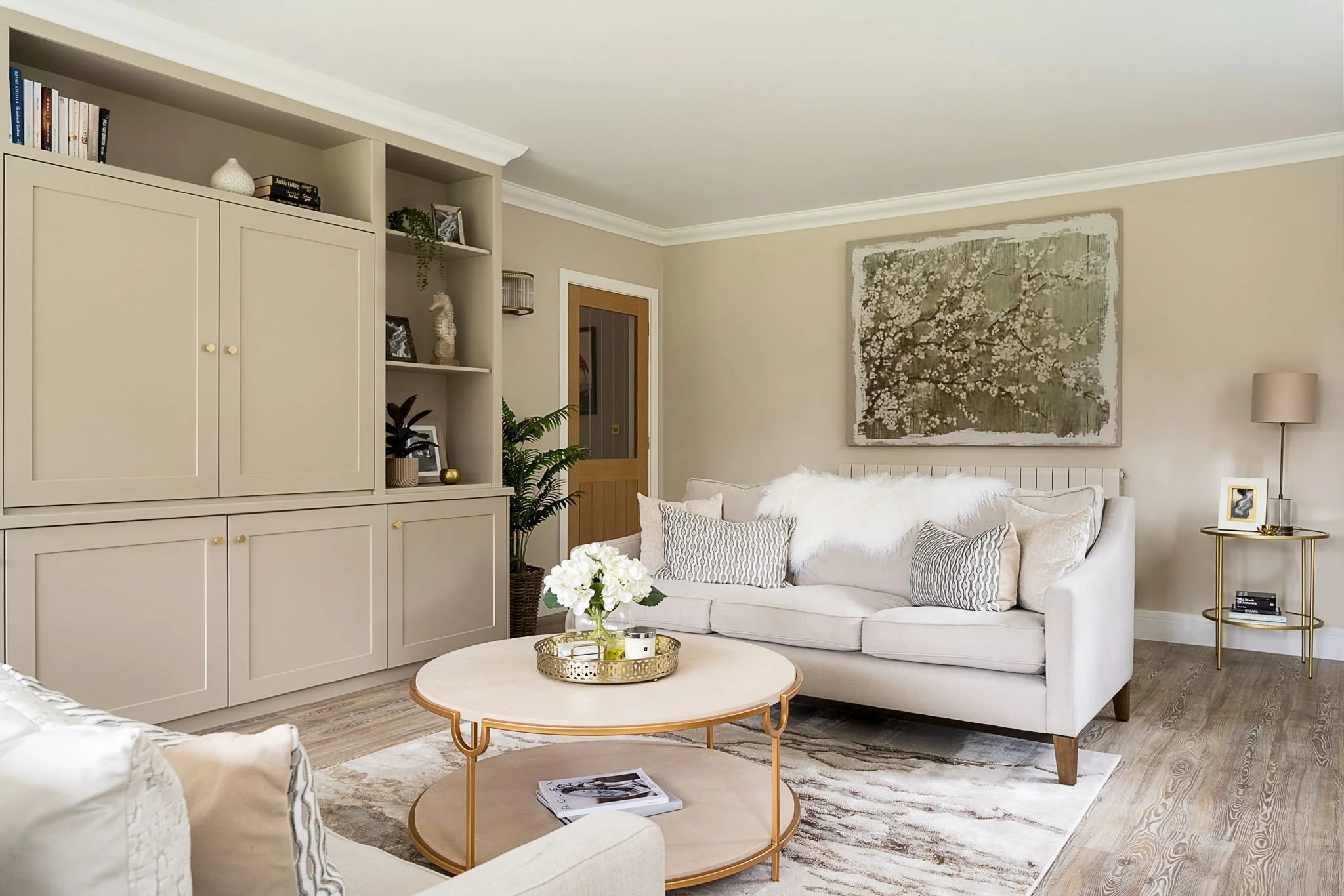
2. Your living room layout isn't working for how you actually live
This is something I'm particularly passionate about.
A room can look absolutely beautiful in a photograph, but if it doesn't work for the people living in it, then I don't believe it's a successful design.
One of the first things I consider when working with clients is how they want to use their space.
Do they love entertaining? Do they need somewhere cosy to relax in the evenings? Is it a busy family room where everyone gathers together?
Your furniture layout needs to support all of those things.
A lovely example of this is my Henley project.
When I became involved, the house was still in the early stages of its renovation, which gave us the opportunity to reconsider some of the original layout decisions.
The architect's proposed arrangement positioned the main sofa area towards the garden, with the dining space further away.
But after understanding how the family wanted to live, I suggested moving the dining area towards the garden instead, creating a lovely connection between indoor and outdoor living.
This also allowed us to create a cosier, more inviting seating area.
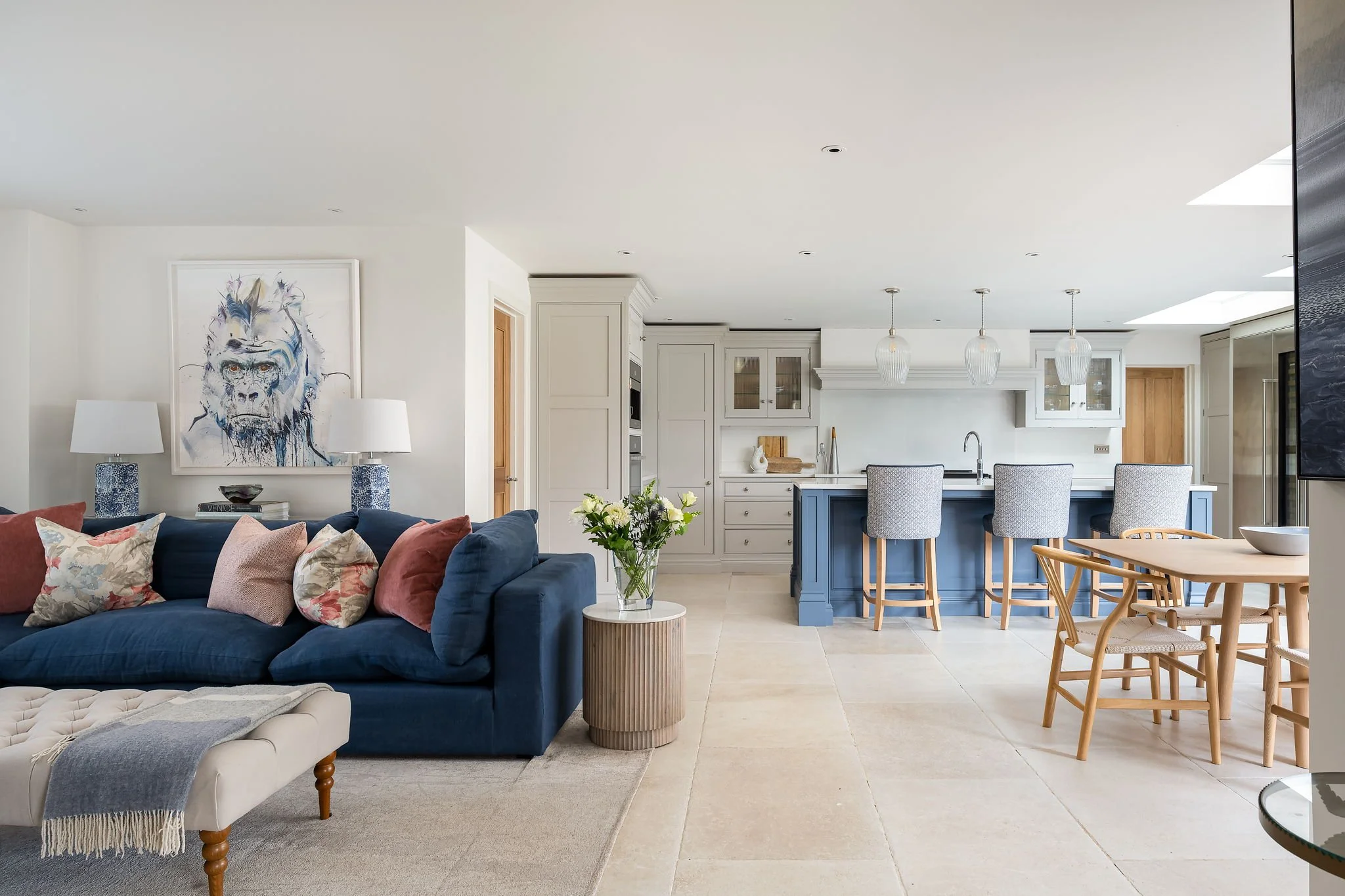
At my Henley project, rethinking the original layout helped create a better connection between the dining area and garden.
It wasn't about adding more furniture or spending more money. It was about making the space work better for the people who would be living there.
Here's what you can try at home:
Ask yourself three questions:
What do we actually use this room for most often?
What frustrates us about the current arrangement?
Could moving the furniture improve how the space feels and functions?
Sometimes repositioning a sofa, moving an armchair or creating a more defined seating area can make an enormous difference.
And don't automatically assume all your furniture needs to sit against the walls!
Bringing pieces slightly further into the room can create a much more sociable and welcoming arrangement, provided you leave comfortable space to move around.
3. Your room doesn't have a clear focal point
Have you ever walked into a room and felt that your eye doesn't quite know where to look?
That can often be because there's no clear focal point.
A focal point is something that naturally draws your attention when you enter a space.
It might be a beautiful fireplace, a favourite piece of artwork, an interesting architectural feature or even a wonderful view of the garden.
When everything is competing for attention, a room can start to feel busy or unsettled.
Here's what I'd suggest:
Stand in the doorway of your living room and notice where your eye goes first.
Is it something you love?
Or is it the television, an awkward corner or perhaps an area that's become a little cluttered?
Think about what you'd really like to celebrate in the room.
It might mean repositioning a piece of artwork, arranging furniture to frame a fireplace or using a beautiful sideboard to create a feature.
And remember, your focal point doesn't have to be something expensive.
Sometimes it's about making more of what you already have.
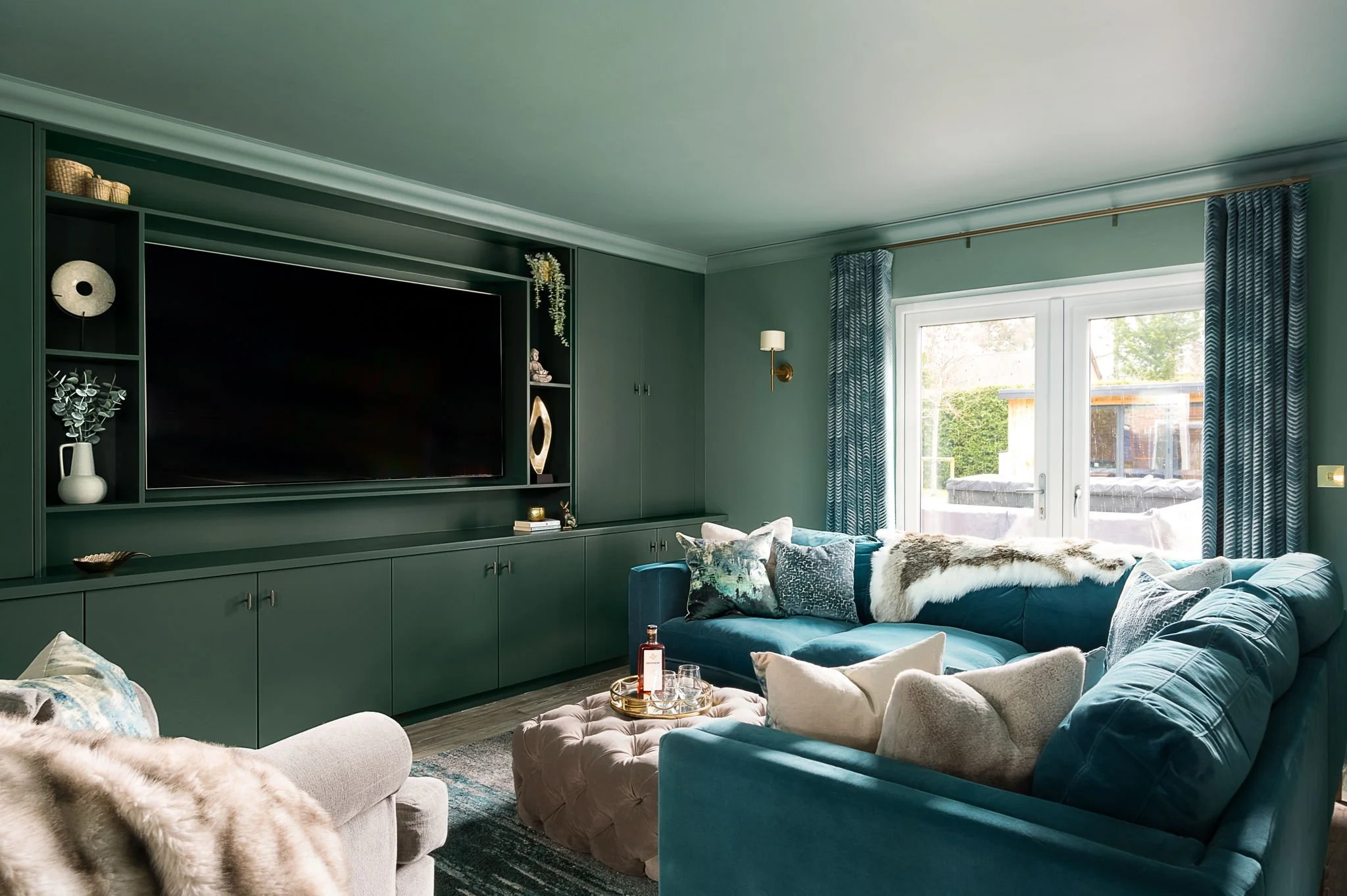
4. Your living room is missing visual balance
This is one of those things that can be difficult to put your finger on, but once you start noticing it, you'll see it everywhere!
Visual balance is about how furniture, colour, pattern and materials are distributed throughout a room.
For example, imagine a living room with a large dark sofa, a substantial wooden cabinet and several other heavy pieces of furniture all positioned on one side.
The other side might have just a small armchair and a delicate side table.
Even if every piece is lovely individually, the room can feel visually lopsided.
The same applies to colour.
If all your stronger colours are concentrated in one corner, the room can feel disconnected rather than cohesive.
Here's a little trick I often recommend:
Take a photograph of your living room from the doorway.
It's amazing how much easier it can be to spot things when you're looking at a photograph rather than standing in the space.
Look at where the larger pieces of furniture sit, how the colours are distributed and whether one area feels much busier than another.
Could you repeat a colour from your artwork in a cushion on the opposite side of the room?
Could a lamp or a taller piece of furniture help balance the height of something elsewhere?
You don't need everything to be perfectly symmetrical. In fact, I often prefer a more relaxed and natural arrangement.
But creating a sense of balance helps a room feel much more harmonious.
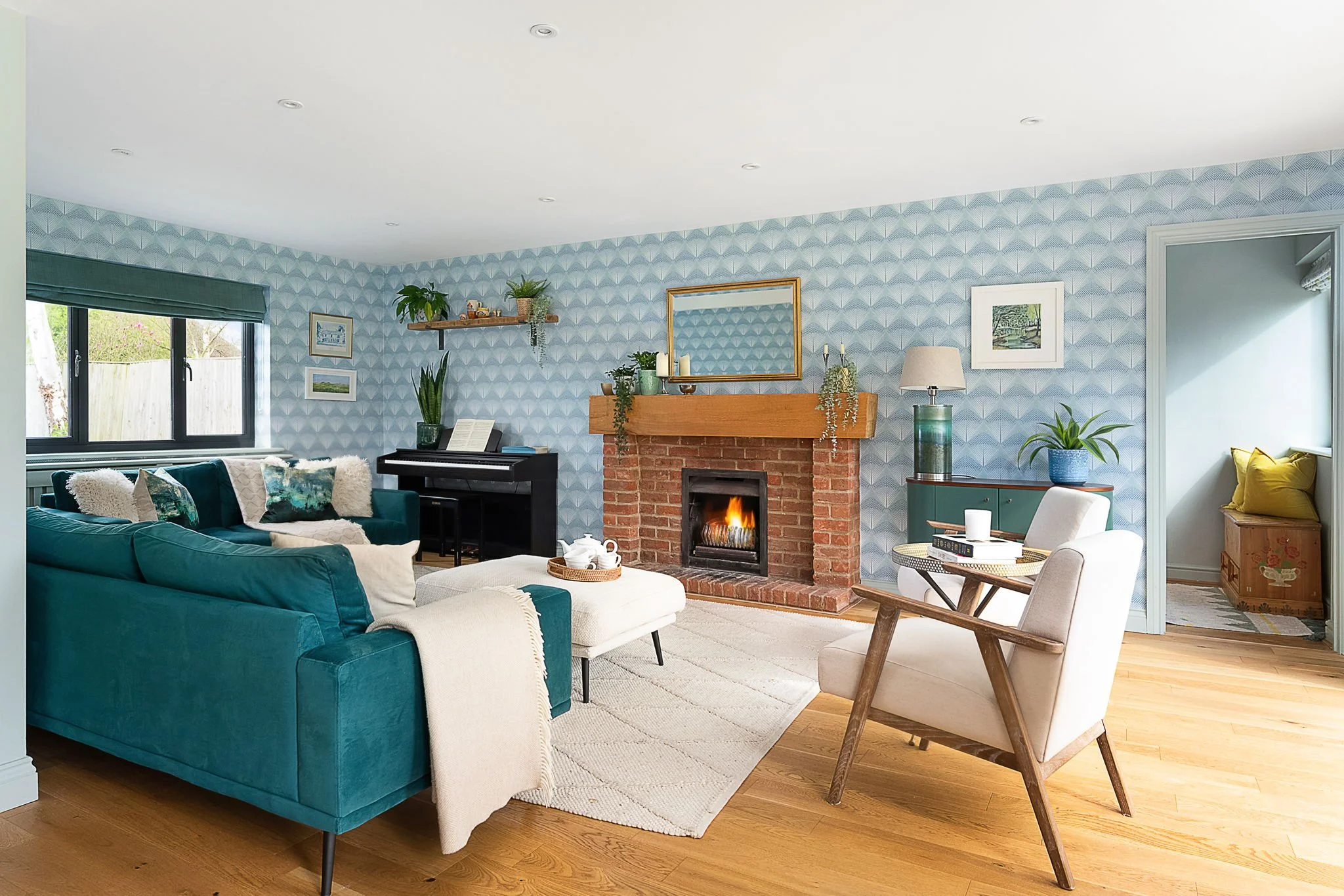
5. You've been buying individual pieces without an overall design plan
And this is probably the biggest reason I see living rooms struggling to come together.
It's so easy to fall in love with a gorgeous sofa, spot a beautiful wallpaper or order a coffee table because it looked wonderful in someone else's home.
And there's absolutely nothing wrong with choosing things you love!
But without an overall plan, you can end up with lots of lovely individual pieces that don't quite work together.
Perhaps the colours aren't connecting, the furniture proportions feel wrong or the overall atmosphere isn't what you'd hoped for.
This is why I always start my interior design projects by understanding the bigger picture.
How do my clients want their home to feel? How does the space need to function? What do they already own and love? And where should they prioritise their budget?
Once we have those foundations in place, the individual decisions become so much easier.
It's also the approach I teach in my Happy Home Design course, because understanding these foundations helps you make more confident decisions throughout your home.
Here's what you can do:
Before making your next purchase, take some time to think about the room as a whole.
Ask yourself:
How do I want this room to feel?
What do I need it to do?
Which pieces do I already own and want to keep?
What colours, materials and finishes will help everything work together?
What's my budget, and where should I invest the most?
You don't have to transform your entire room overnight.
In fact, I often encourage clients to approach their homes in stages.
But having a clear plan from the beginning means that every purchase is taking you closer to the home you really want, rather than becoming another expensive mistake.
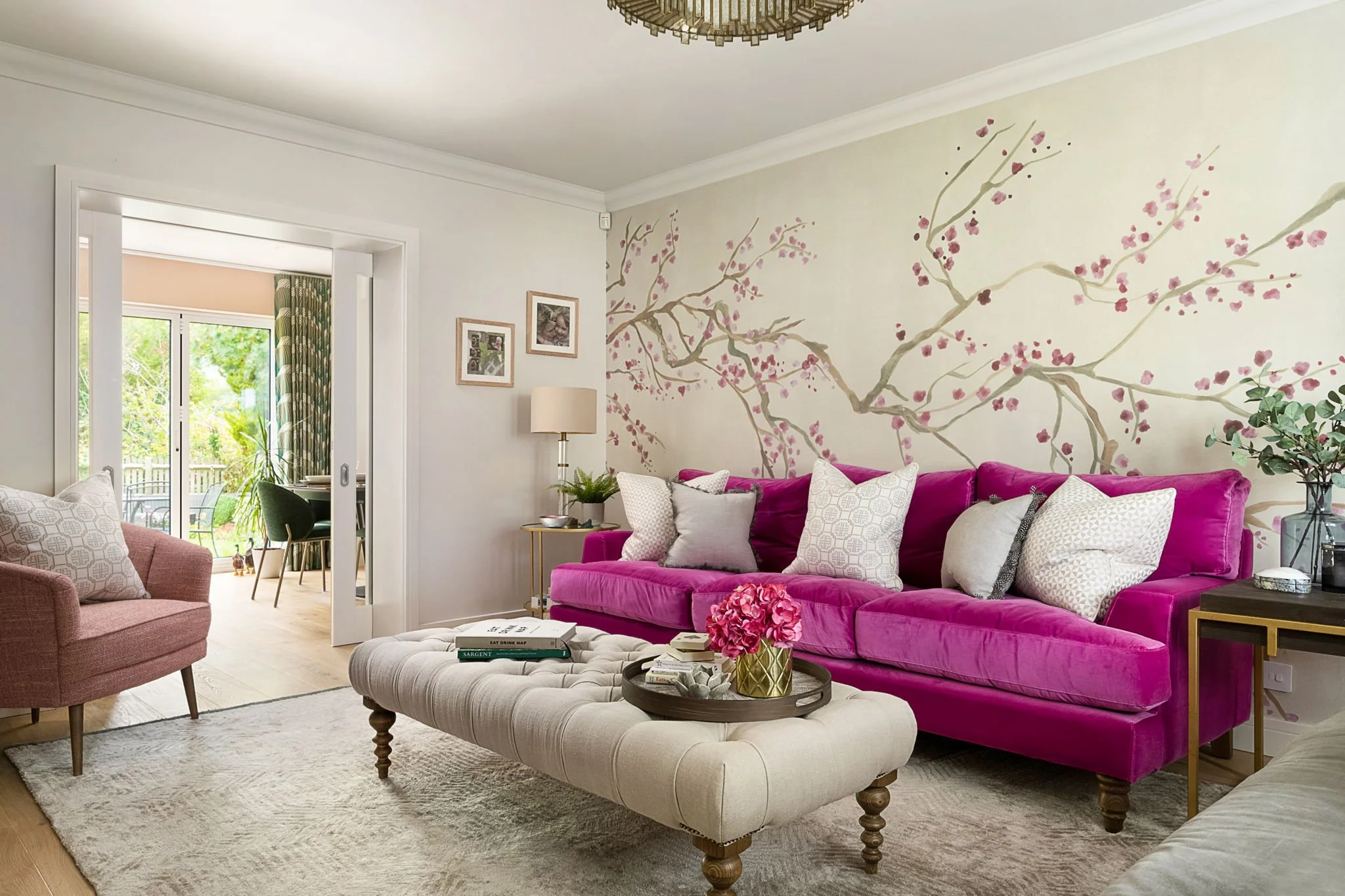
Sometimes a fresh pair of eyes is all you need
One of the things I love most about my work is showing clients how much difference a few carefully considered changes can make.
Take this living room at my Henley project, for example.
Rather than starting from scratch, I looked at how we could make the existing space work harder and feel more pulled together.
By rethinking the furniture layout and introducing new curtains, a rug and cushions, we were able to bring the room together in a completely different way.
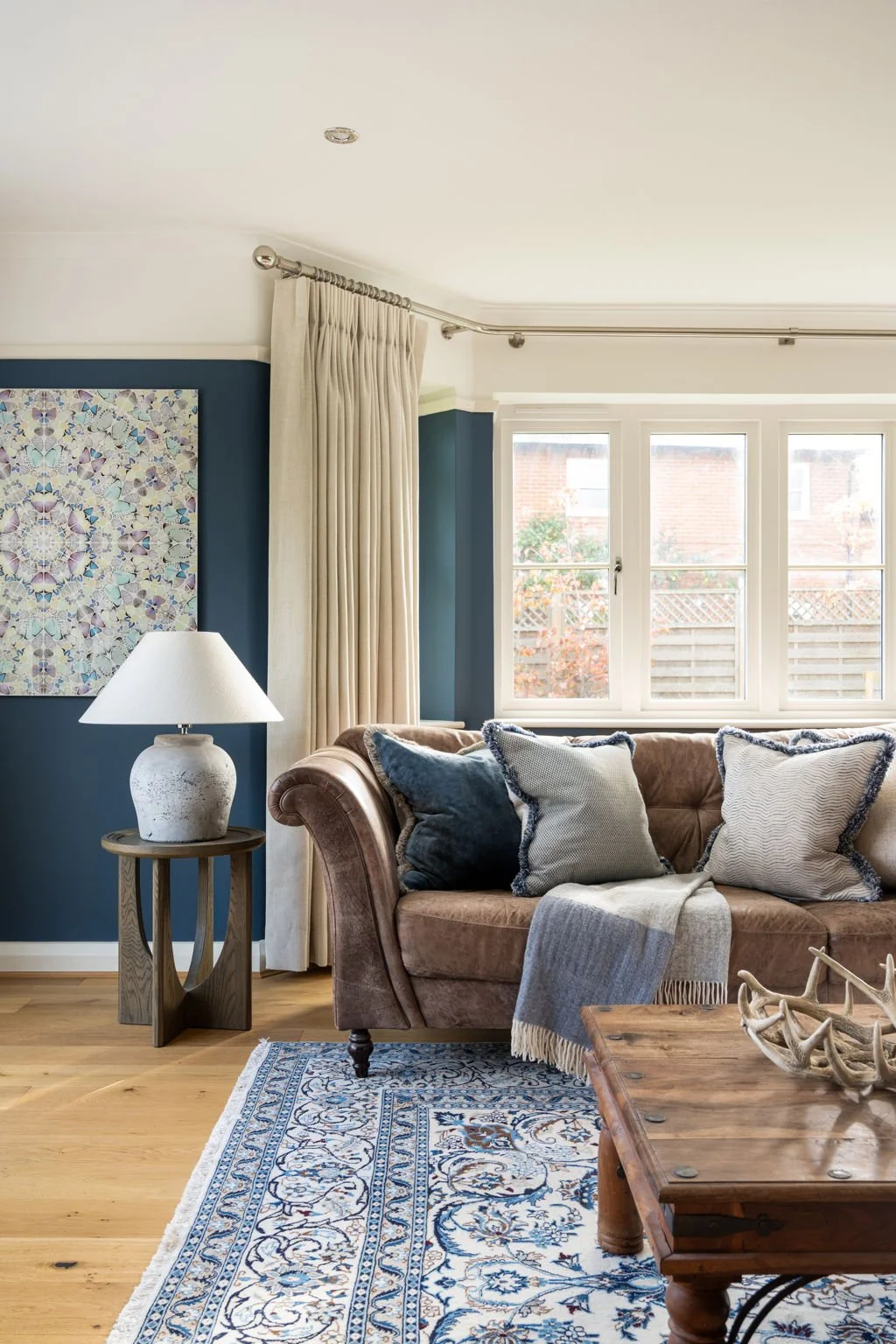
Sometimes it's the carefully considered finishing touches that make all the difference. In Henley, updating the layout, curtains, rug and cushions helped bring the living room together.
These might sound like relatively small changes, but when they're considered as part of the overall design, they can have a huge impact on how a room looks and feels.
And that's something I often help homeowners with during my two-hour Interior Design Consultations.
Whether you've got a room that feels almost finished but isn't quite working, you're struggling with furniture placement or you're unsure which colours and furnishings to choose, sometimes all you need is a little professional guidance to move things forward.
You don't always need a complete redesign. You might just need a clear plan and the confidence to make the right changes.
So, what's the secret to creating a living room that feels right?
The most successful interiors aren't necessarily the ones with the biggest budgets or the most expensive furniture.
They're the ones where everything has been carefully considered.
The layout works for everyday life. The furniture feels comfortable and proportionate. The colours and materials complement one another. And most importantly, the space reflects the people who live there.
Because a beautiful home should be about so much more than how it looks. It should make you feel good, too.
My role as an interior designer is to take the uncertainty out of those decisions, helping my clients invest confidently in the right pieces while ensuring everything works together in terms of style, colour, proportion and overall budget.
And whether you're planning a complete renovation or simply trying to finish a room that's never felt quite right, having a clear design direction can make all the difference.
Ready to make your home feel just right?
Whether you're looking to refresh a room, gain confidence designing your own home or embark on a bigger renovation, I'd love to help you create a home that feels beautiful, welcoming and completely personal to you.
There are three ways we can work together.
Interior Design Consultation
Perfect if you have a room that isn't quite working or just needs those finishing touches.
My two-hour Interior Design Consultation gives you personalised, practical advice to help you move forward with confidence.
We can explore furniture layouts, colour schemes, window treatments, lighting and those little details that make such a difference.
Sometimes a fresh pair of eyes and a clear plan are all you need to transform a room.
Happy Home Design Online Course
Perfect if you'd love to design your home yourself, but want professional guidance along the way.
I created Happy Home Design to share the step-by-step design process I use with my own clients, helping you understand your personal style, plan your rooms, develop cohesive colour schemes and make confident decisions about furniture, lighting and finishing touches.
You'll also have access to my little black book of trusted suppliers and our private Facebook community, where you can ask me questions as you work through your home.
And there's a little something extra if you join during November 2026!
You'll receive a complimentary 30-minute one-to-one design session with me, plus my Christmas Styling Masterclass, giving you £149 worth of additional bonuses, completely free!
Happy Home Design is £597, with both bonuses included at no additional cost.
Full Interior Design Service
Perfect if you're planning a renovation, extension or complete room transformation and would love an experienced designer to guide you through the process.
From space planning and developing a cohesive design scheme to sourcing furniture, lighting and those all-important finishing touches, I can help bring your vision to life.
My approach is always centred around you, your lifestyle and creating a home that feels as wonderful to live in as it looks.
I'm currently welcoming enquiries for interior design projects starting in 2027, so if you're planning a renovation or have exciting plans for your home, now is a lovely time to get in touch.
Because happy homes make happy people.
Holly x
Holly Scott | The Happy Home Designer
