
Your hallway might not be the room you spend the most time in, but it’s one of the most important spaces in your home.
It’s the first thing you see when you walk through the front door, the first glimpse guests get of your home and often the space that connects everything else together.
Yet hallways are so often an afterthought.
We spend hours choosing kitchens, sofas and bedroom colours, while the hallway gets a quick coat of neutral paint, somewhere to put the shoes and perhaps a mirror on the wall.
But I think a hallway deserves much more love than that.
The best hallway designs balance practicality with personality. Yes, they need to cope with coats, shoes, bags, muddy feet and busy family life, but they should also give you that lovely feeling of being home the moment you walk through the door.
So, whether you're renovating your home or simply wondering why your entrance hallway doesn't quite feel finished, here are my 10 hallway ideas for creating a beautiful, practical and welcoming entrance.
1. Start with how your hallway needs to work
Before you start thinking about paint colours, wallpaper or beautiful console tables, think about what actually happens when you walk through your front door.
Where do the shoes go? What happens to coats and bags? Where do you put your keys? Do you need somewhere for school bags or dog leads? Would a bench make life easier when you're putting shoes on?
Every household will have a different answer, which is why I don't believe in designing a hallway simply around how it looks on Pinterest.
In a busy family home, good hallway storage can make an enormous difference. Closed storage is particularly useful because all the everyday clutter can disappear, leaving the space feeling calmer.
And don't overlook those slightly awkward areas. Under-stairs spaces can sometimes accommodate cupboards, drawers or bespoke storage without taking up valuable space elsewhere.
But equally, not every spare corner needs to become storage.
If you already have enough, an awkward area can become a lovely little design moment with a chair, artwork, lamp or beautiful piece of furniture.
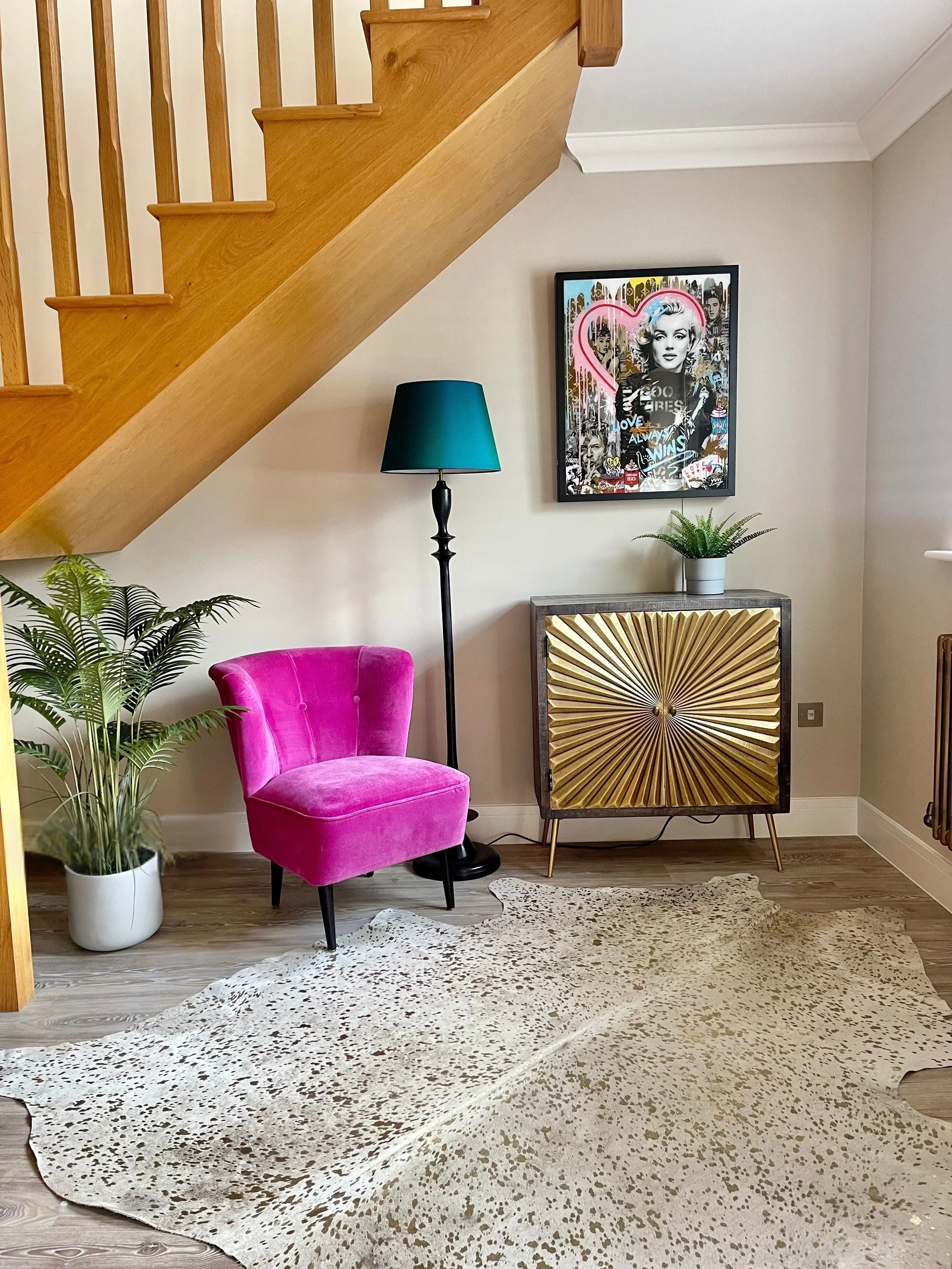
The important thing is that your hallway works for the way you live, rather than simply looking good in a photograph.
2. Don't automatically paint a dark hallway white
One of the most common questions around small hallway ideas is how to make a dark hallway feel lighter.
And the immediate instinct is often: paint it white.
But white needs light to really come alive.
In a hallway with very little natural light, brilliant white can sometimes end up looking grey, cold and a little flat. Rather than fighting what you've got, I often prefer to embrace it.
A beautiful blue, green, warm neutral or even a deeper shade can make a darker hallway feel intentional, cosy and full of character.
Wallpaper can work brilliantly too.
Because a hallway is a transitional space rather than somewhere you sit for hours at a time, it's a great place to be a little braver with colour and pattern.
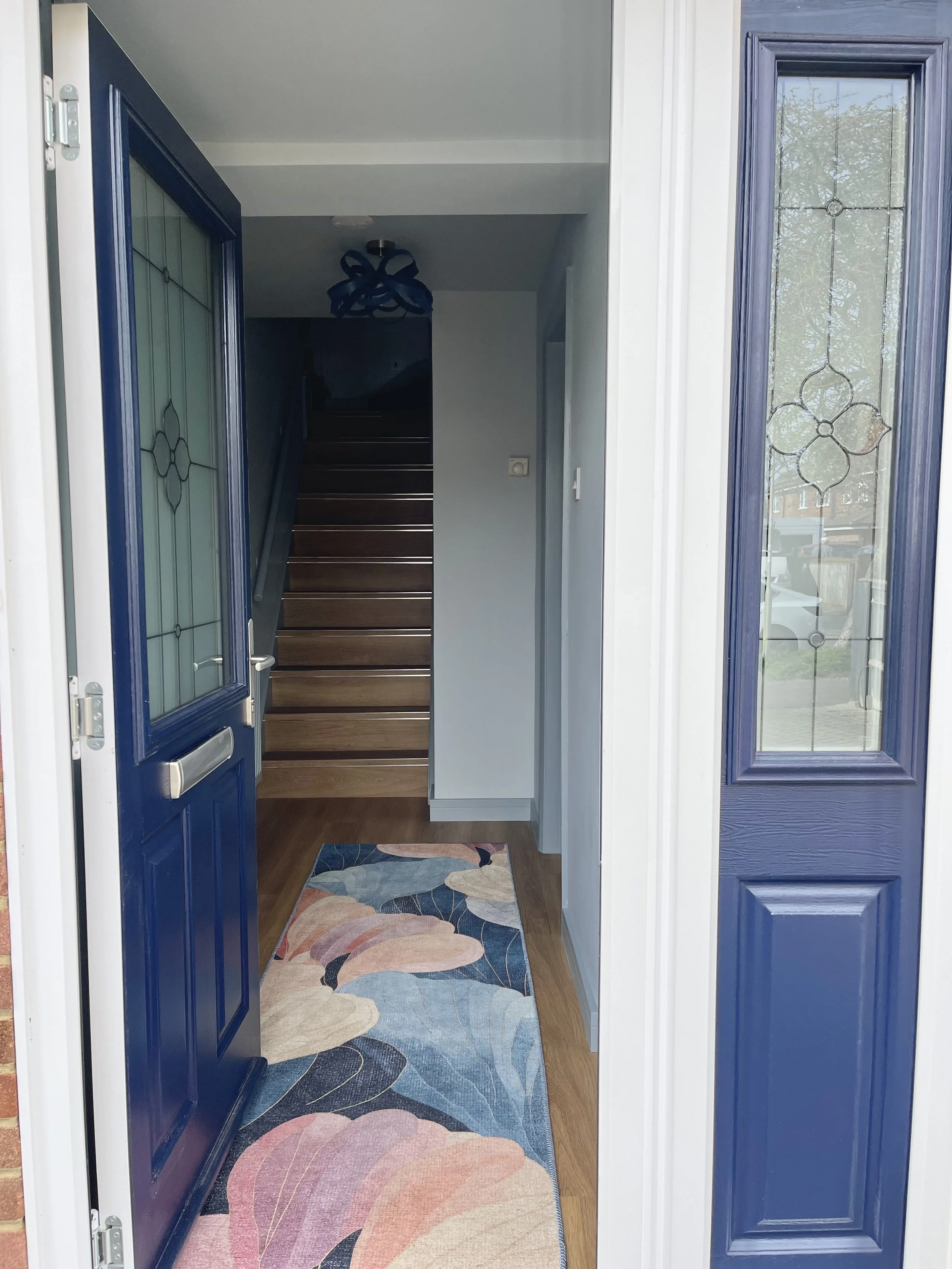
Think about the hallway as part of the wider colour palette of your home too. It doesn't have to match the adjoining rooms, but the colours should feel happy sitting alongside one another.
3. Think about your first view when you open the door
Here's something you can do before changing anything.
Go outside, come back in through your front door and stop.
What does your eye land on?
Is it a beautiful piece of artwork? A console and lamp? An interesting view into another room?
Or is it a radiator, a blank wall or a pile of shoes?
That first sightline can make an enormous difference to how your home feels.
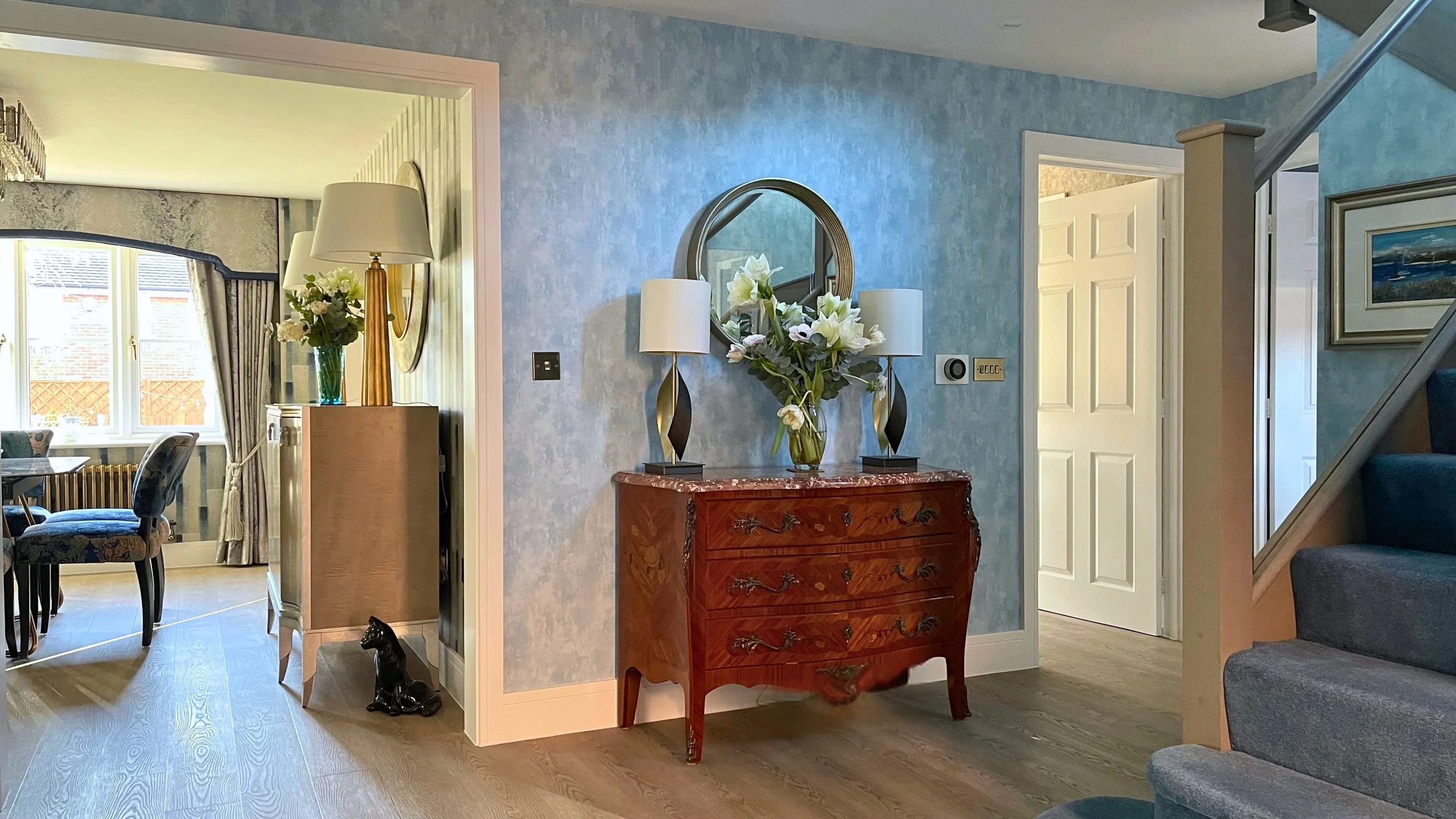
Creating a focal point doesn't necessarily mean filling the hallway with furniture. It could be an oversized mirror, a favourite painting, beautiful wallpaper, a pendant light or simply a fabulous colour.
And look beyond the hallway itself.
What can you see through the doorways leading off it?
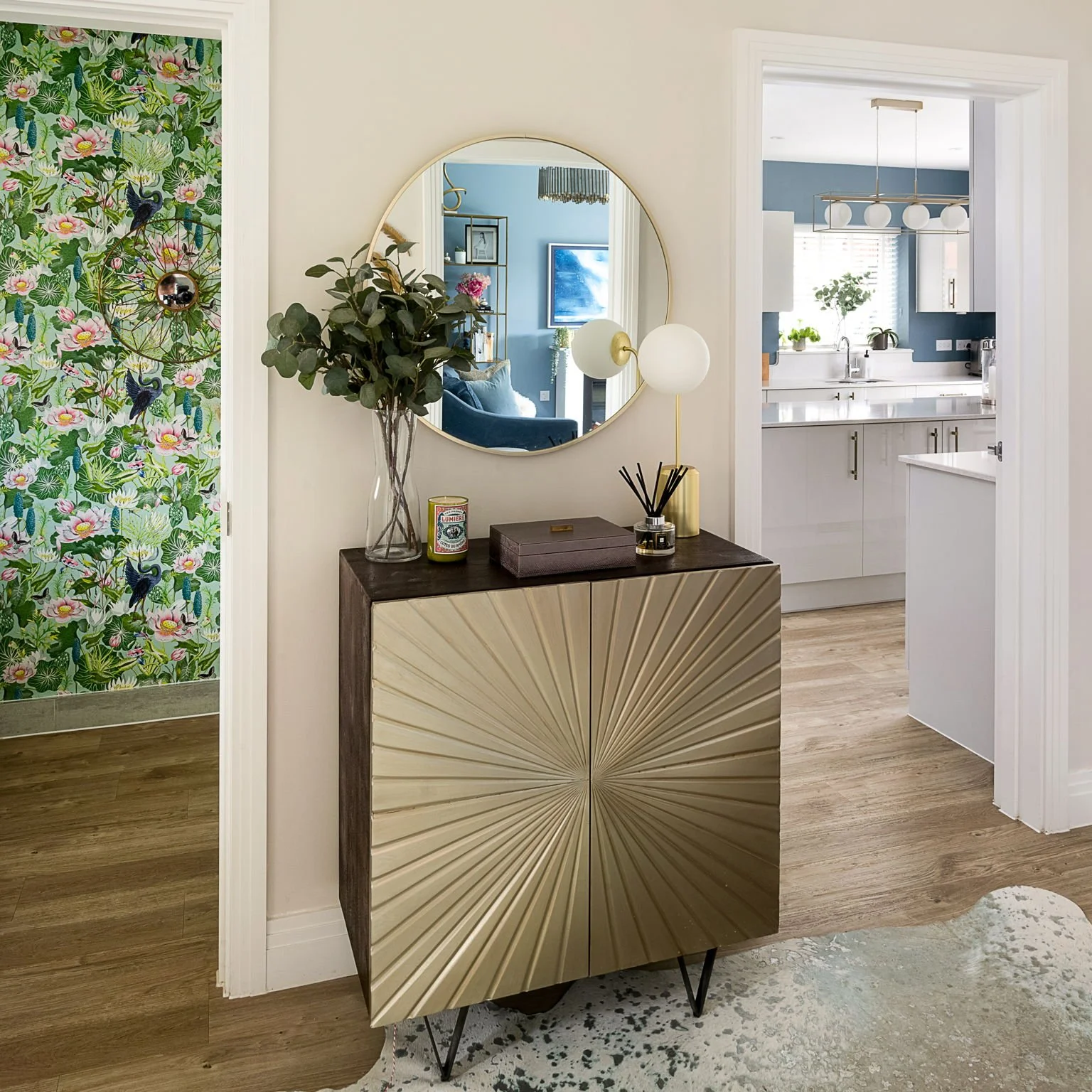
I love using those little glimpses of colour, wallpaper and artwork to draw you through a house. A hallway often connects several different rooms, so it can become the thread that ties the whole interior together.
4. Choose furniture that fits the hallway
That beautiful console table isn't quite so beautiful if everyone has to turn sideways to get past it!
One of the easiest hallway design mistakes to make is choosing furniture that's simply too big for the space.
Hallways are circulation spaces first, so you need to protect that flow.
Measure properly before buying anything and think about how people actually move through the space. Remember, you're not always walking through your hallway empty-handed. There will be shopping bags, suitcases, children, dogs and probably several people all trying to get out of the house at once!
In a narrow hallway, a slim console, shallow cabinet or wall-mounted shelf can work far better than a traditional piece of furniture.
If you're lucky enough to have a larger entrance hall, you can afford to create something with much more presence.
It's all about proportion.
Furniture should feel as though it belongs in the space, rather than as though you've fallen in love with something and squeezed it in regardless.
5. Layer your hallway lighting
Hallway lighting deserves far more thought than simply putting a pendant in the middle of the ceiling.
Lighting has an enormous impact on how welcoming your home feels, particularly during autumn and winter when you may be coming home in the dark.
Where possible, I like to create layers.
You might have ceiling lighting for practical illumination, wall lights to soften the space and a table lamp on a console for warmth and atmosphere in the evening.
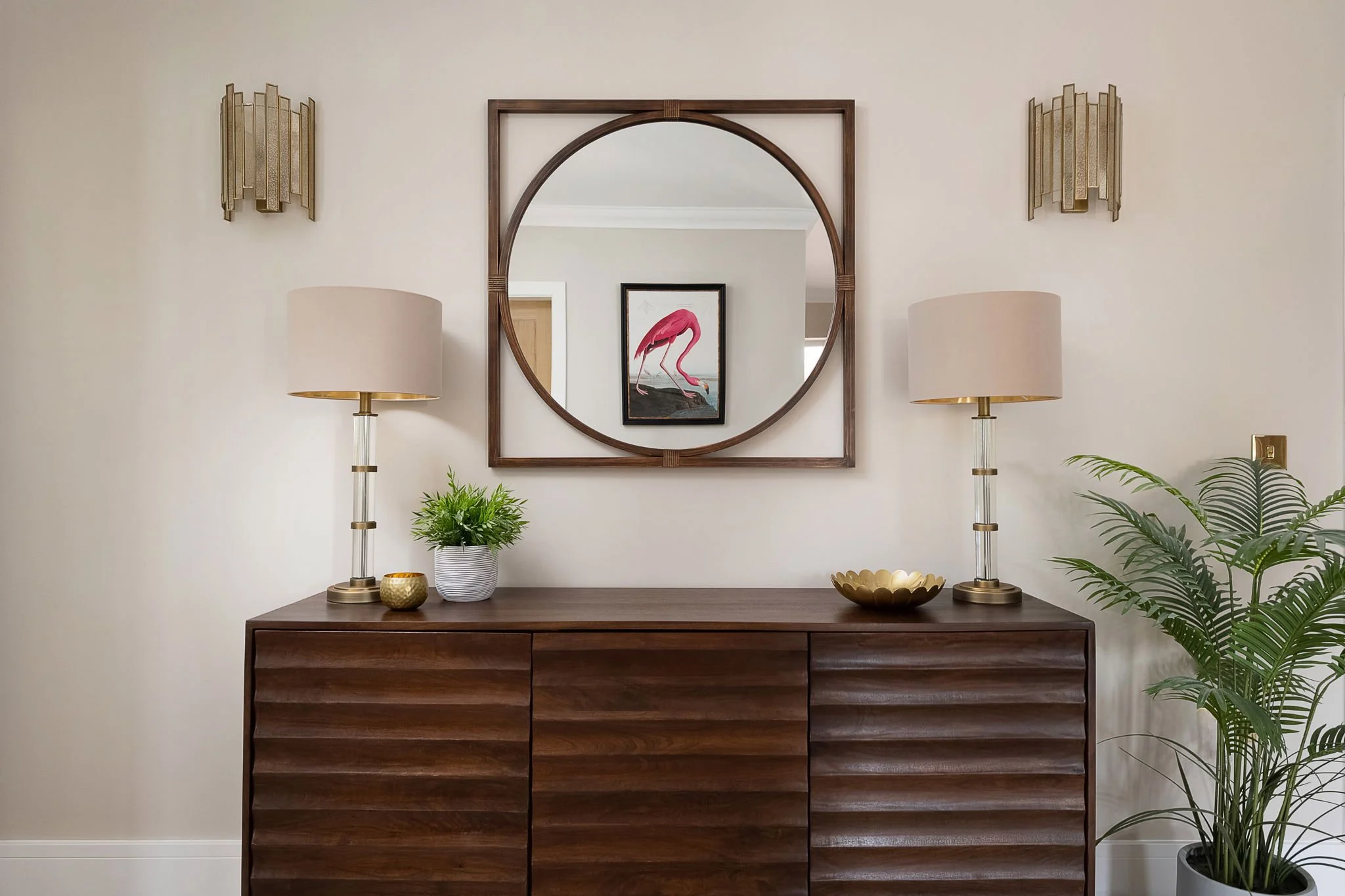
Mirrors can be really useful here too. Positioned thoughtfully, they can reflect both natural and artificial light and help a hallway feel brighter.
And don't underestimate decorative lighting. A fabulous pendant or wall light can become as much a part of the design as a piece of artwork.
Instead of only asking, "Is there enough light?", think about:
"How do I want this space to feel when I come home?"
That's a much better starting point.
6. Choose hallway flooring for real life
Your entrance hallway has to work hard.
It's dealing with muddy shoes, wet paws, school bags, pushchairs, heels and some of the heaviest footfall anywhere in your home.
So while appearance matters, practicality really matters too.
There are lots of beautiful hallway flooring ideas, including tiles, stone, timber and good-quality wood-effect flooring. The right choice will depend on your home, your lifestyle and what's happening in the adjoining rooms.
A runner can also be a gorgeous way of introducing colour, pattern and softness, particularly if the hallway leads directly onto the stairs.
But whatever you choose, think about maintenance as well as appearance.
If you have children, dogs and a busy household, a pale, delicate floor that causes you stress every time someone walks through the front door probably isn't going to make you very happy.
Beautiful design has to work in real life.
7. Use mirrors strategically
Yes, mirrors and hallways are old friends, but don't add one simply because you've been told every hallway needs a mirror!
Think about what it's actually going to reflect.
Positioned well, a mirror can bounce natural light around a darker hallway, reflect something beautiful elsewhere in the room and create a greater feeling of space.
Positioned badly, you may end up with a fabulous reflected view of the coat rack or downstairs loo!
Scale matters too.
A tiny mirror floating above a substantial console can look completely out of proportion, whereas a larger mirror can anchor the furniture beneath it and create a much stronger focal point.
Sometimes it's these relatively small decisions around proportion, placement and sightlines that make a room suddenly feel right.
8. Connect your hallway to the rest of your home
Your hallway doesn't need to match every room leading off it.
In fact, I'd rather it didn't.
But there should be some sense that all the spaces belong to the same home.
That connection might come through colour, materials, flooring, metal finishes or artwork.
Perhaps a blue used boldly in the hallway appears again in a softer tone in the living room. Brass on the hallway lighting might be repeated on kitchen handles. Or a patterned wallpaper might introduce colours that appear elsewhere in your home.
These little connections help a home feel considered rather than like a collection of individually decorated rooms.
If you're planning a whole-house renovation, this is also why it's worth thinking about your rooms together rather than making every design decision independently.
You don't need every detail decided on day one, but having an overall direction can prevent some very expensive changes later!
9. Don't forget about the staircase
If your staircase sits within your entrance hallway, it's a huge visual part of the space.
Don't treat it as a completely separate decorating job.
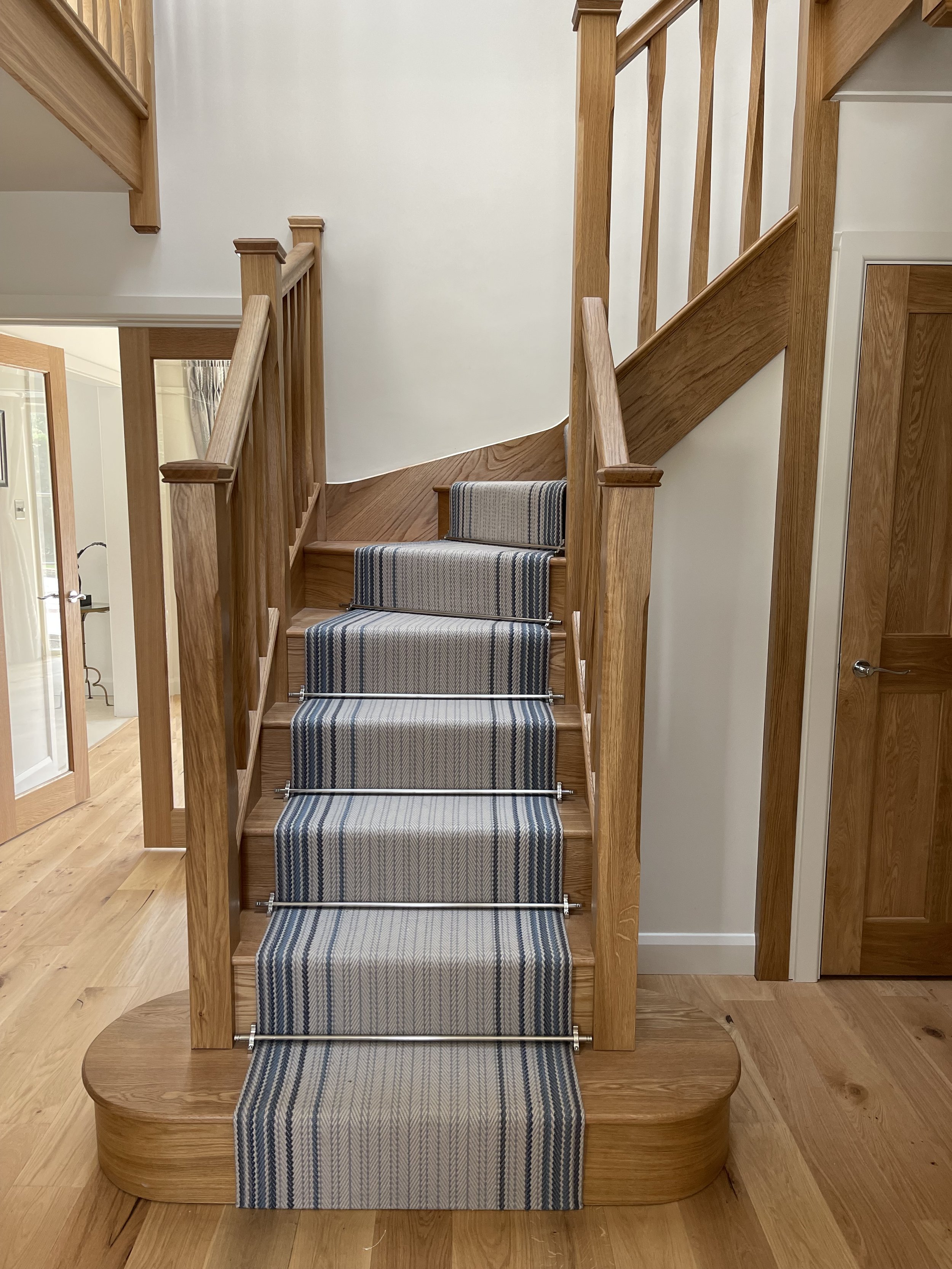
Think about the balustrade, paintwork, stair carpet or runner and the wall alongside it as part of the overall hallway design.
A stair runner can be a fantastic opportunity to introduce colour and pattern. Painting the handrail or woodwork can also completely change the character of an existing staircase without the expense of replacing it.
And don't forget to look up.
Staircases give you height, which means you may have opportunities for statement lighting, artwork or colour that you simply don't get in other rooms.
A staircase isn't just a practical route to the next floor. It can be one of the strongest design features in your hallway.
10. Give your hallway some personality
This is probably the most important one for me.
Your entrance hallway is the first glimpse anyone gets of your home, so it should say something about the people who live there.
That doesn't mean it has to be dramatic.
Personality might come from a painting you've owned for years, family photographs, a vintage chest of drawers, a colourful chair, fabulous wallpaper or an unusual lamp.
What I try to avoid is creating a hallway entirely from things we've seen grouped together hundreds of times before.
Console. Mirror. Lamp. Basket.
There's absolutely nothing wrong with any of those things. But I'd still ask:
Where are you in the room?
The most successful homes aren't the ones that follow every interiors trend. They're the ones that feel personal to the people who live there.
And your hallway is the perfect place to start telling that story.
Creating a hallway that makes you happy to come home
You don't need a huge entrance hall or masses of natural light to create a beautiful hallway.
Start with the practical decisions. Think about storage, flooring, furniture proportions and lighting. Then layer in colour, pattern, artwork and the pieces that give your home its personality.
And don't leave your hallway until you've finished all the "important" rooms.
It's the first part of your home you experience when you walk through the door and the last you see when you leave.
For me, good interior design isn't just about creating a home that looks beautiful. It's about creating somewhere that works for your life and makes you feel good to be there.
After all, happy homes make happy people.
Need help designing your hallway or home?
Sometimes you know that a space isn't working, but it's difficult to see the solution when you're living with it every day.
Perhaps you're unsure how to make your hallway work harder, can't decide on the right colour or flooring, or you're renovating and have lots of decisions to make before the builders need answers.
That's exactly where having an interior designer involved can help.
My Interior Design Service is for homeowners who would like me to develop the complete design for their space, including the overall design direction, layout, colours, finishes, furniture and sourcing.
If you don't need a complete room design but would love professional advice and a clear direction, my 2-hour Interior Design Consultation is ideal for working through questions such as colour schemes, layouts, lighting, window treatments and those finishing touches that can make all the difference.
I work with homeowners across Oxfordshire, Berkshire, Buckinghamshire and London, helping them create homes that feel personal, practical and completely their own.
